Enter the length of the joint, its width and depth, and your tube size. A 10.1 fl oz tube lays about 55 feet of a 3/16 inch bead, the figure DAP prints for its cartridges.
Bead or joint width
Depth
Tube size (fl oz, on the label)
feet
How many tubes?
1tube
One 10.1 fl oz tube lays about 55 feet of a 3/16″ round bead, so 20 feet takes 0.4 tubes’ worth.
The arithmetic: 10.1 fl oz × 1.8047 = 18.23 cubic inches, over 0.7854 × 0.1875² = 0.0276 square inches, is 660 inches of bead per tube.
The makers’ own figure for this tube and size: DAP: 55 linear feet (ALEX PLUS, DYNAFLEX 230, SILICONE MAX and others). Red Devil: 50 to 55 feet (Kitchen & Bath). GE: about 51 feet (its silicones).
These are full-tube figures, ours and the makers’: nothing is left for waste or what stays in the nozzle.
How it works
It lays the tube’s contents out as a bead. A fluid ounce is 1.8047 cubic inches. A round bead’s cross-section is 0.7854 times its width squared, and a joint’s is its width times its depth. That arithmetic gives DAP’s 55 feet for 10.1 fl oz at 3/16 inch, Sashco’s 32 feet for 10.5 oz at 1/4 inch, and every figure in Sika’s joint table.
The makers’ own coverage figures
Tube
Bead or joint
Maker’s figure
10.1 fl oz
3/16″ bead
55 ft (DAP); 50 to 55 ft (Red Devil); about 51 ft (GE silicones)
10.1 fl oz
3/8″ bead
Up to 14 ft (DAP DYNAFLEX ULTRA); about 13.7 ft (GE)
10.5 oz
1/4″ bead
32 ft (Sashco Big Stretch, Lexel)
9.8 fl oz
3/16″ bead
53 ft (DAP 100% silicones)
9 fl oz
3/16″ bead
49 ft (DAP AMP)
5.5 fl oz
3/16″ bead
30 ft (DAP); 25 to 30 ft (Red Devil)
2.8 fl oz
3/16″ bead
15 ft (DAP); about 13 ft (GE)
10.1 fl oz
1/4 × 1/4″ joint
24.3 ft (Sikaflex)
10.1 fl oz
1/2 × 1/2″ joint
6.1 ft (Sikaflex)
GE’s 3/16 inch figure runs a little under the arithmetic, 51 feet against 55, while its 3/8 inch figure matches it.
Tube sizes
No maker we read calls any size standard. DAP, Red Devil and Sika sell 10.1 fl oz cartridges; GE sells 10.1, 10, 9.5 and 9 fl oz, DAP’s 100% silicones come in 9.8 and its AMP in 9, and Sashco fills 10.5 oz. Squeeze tubes run from 2.8 to 5.5 fl oz. The size is on the label.
Backer rod in deep joints
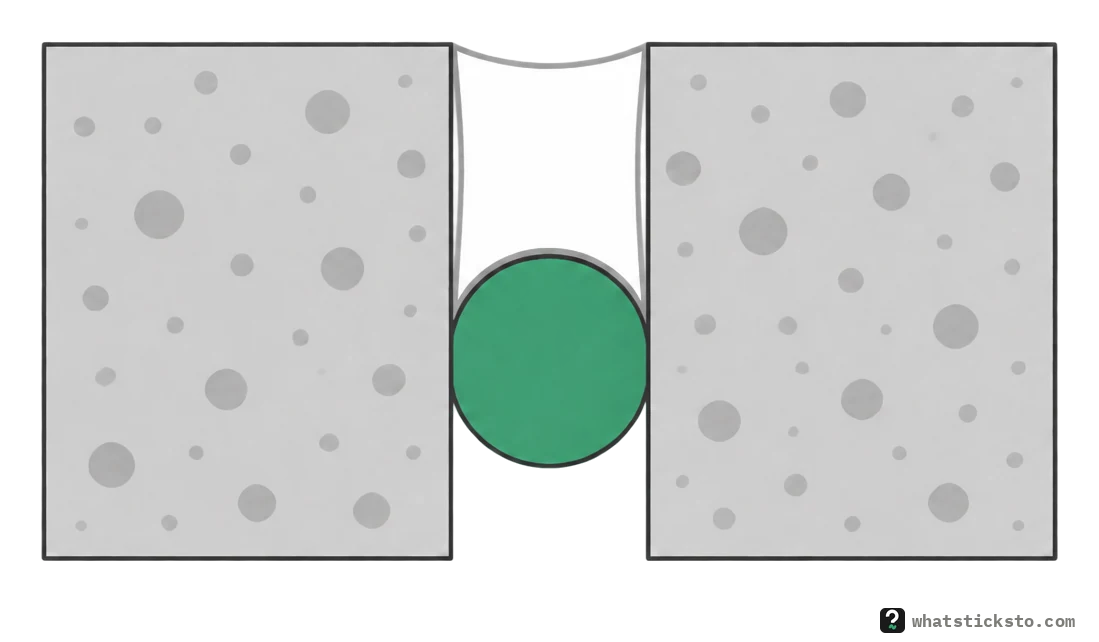
Backer rod is a foam rope pressed into a deep joint before the caulk goes in. Sashco says to use it in joints 1/4 inch wide and 1/2 inch deep or larger, because it fills the joint so you use less caulk and shapes the joint so the caulk can stretch without tearing. GE adds that it avoids three-sided adhesion, and Sika calls for closed-cell backer rod in joints that take foot or car traffic. No maker we read gives a rule for how much wider than the joint the rod should be.
Caulk
backer rod
Backer rod fills the depth of the joint, so less caulk goes in.
How big a joint each one takes
DAP ALEX PLUS: up to 1/2 inch wide by 1/2 inch deep.
DAP KWIK SEAL and ALEX Painter’s: up to 3/8 by 3/8 inch.
DAP DYNAFLEX 230: up to 2 inches wide by 1/2 inch deep.
Sashco Big Stretch and Lexel: up to 2 inches, with a bead of at least 1/4 inch.
Sikaflex + Construction: up to 1 inch wide, 1/4 to 1/2 inch deep.
About 55 feet of a 3/16 inch bead from a 10.1 fl oz tube, by DAP's figure, and about 14 feet at 3/8 inch. Double the bead's width and the same tube goes a quarter as far.
How much caulk per linear foot?
About 0.18 fl oz a foot for a 3/16 inch bead (DAP's 55 feet from 10.1 fl oz), and about 0.73 fl oz a foot at 3/8 inch.
Should I buy an extra tube?
Neither the arithmetic nor the makers' figures leave anything for waste, so a spare covers mistakes and what stays in the nozzle.
How do I measure the joint?
Measure the gap's width and how deep it is to the backer rod or the bottom, then the total length in feet. For a plain bead along a corner, use the bead width and Round bead.
The coverage figures, tube sizes and joint limits come from each product’s own data sheet at DAP, GE, Red Devil, Sashco and Sika; the arithmetic is shown with every answer. Checked against published data from DAP, GE Sealants, Sashco, Sika and Red Devil.
See all 22 sources
DAP, 100% Silicone Rubber Kitchen, Bath & Plumbing Sealant: product page, FAQ and technical data sheet
GE Sealants, “Can you use silicone sealant over old sealant?” (how-to, 2025)
DAP, ALEX PLUS All-Purpose Caulk: product page, FAQ, technical data sheet (2025) and SDS
DAP, KWIK SEAL Kitchen & Bath Adhesive Caulk: product page, FAQ, technical data sheets (white and clear) and SDS
DAP, AMP Advanced Kitchen & Bath Sealant: product page, FAQ, technical data sheet (2022) and SDS
DAP, DYNAFLEX ULTRA Advanced Exterior Sealant: product page, FAQ, technical data sheets and SDS
DAP, DYNAFLEX 230 Premium Elastomeric Sealant: product page, FAQ, technical data sheet and SDS
DAP, SILICONE MAX Premium Kitchen & Bath 100% Silicone Sealant: product page, FAQ, technical data sheet and SDS
DAP, 100% Silicone Rubber Window, Door & Siding Sealant: product page, technical data sheet and SDS (2026)
DAP, ALEX Painter’s Acrylic Latex Caulk: product page, FAQ, technical data sheet and SDS
DAP, AMP Self-Leveling Concrete and Mortar Sealant: product page, FAQ, technical data sheet and SDS
GE Sealants, Advanced Silicone 2 Kitchen & Bath Sealant: product page, technical data sheet (2025) and SDS
GE Sealants, Paintable Silicone Supreme Kitchen & Bath Sealant: product page, technical data sheet and SDS
GE Sealants, Pro Seal Max Kitchen & Bath Sealant: product page, technical data sheet and SDS
GE Sealants, Advanced Siliconized Acrylic Kitchen & Bath Sealant: product page, technical data sheet (2024) and SDS
GE Sealants, Painter’s Pro Siliconized Acrylic Seal & Paint: product page, technical data sheet (2024) and SDS
Red Devil, Kitchen & Bath Siliconized Acrylic Sealant: product page, technical data sheet, FAQ and SDS
Sashco, Big Stretch: product page, technical data sheet and SDS (2024)
Sashco, Lexel: product page, technical data sheet and SDS (2024)
Sashco, “How to Use Backer Rod” (how-to)
Sika USA, Sikaflex + Self Leveling Sealant: product page and product data sheet (2018)
Sika USA, Sikaflex + Construction Sealant: product page and product data sheet (2026)
General guidance from manufacturer and standards data. Products vary, so check the label and the maker's instructions.